“I am not a Sunday morning inside four walls
with clean blood
and organized drawers.
I am the hurricane setting fire to the forests
at night when no one else is alive
or awake
however you choose to see it
and I live in my own flames
sometimes burning too bright and too wild
to make things last
or handle
myself or anyone else
and so I run.
run run run
far and wide
until my bones ache and lungs split
and it feels good.
Hear that people? It feels good
because I am the slave and ruler of my own body
and I wish to do with it exactly as I please”
― You're Doing Just Fine
Mar 16, 2019
Mar 9, 2019

Jan 9, 2019
We are our words....

“ We are our words, and black and bruised and blue. Under our skins, we’re laughing. In triste veritas? Take hold, sweet hands, come on… Broken! When you falter, all eludes. This is a seasick way, this almost/never touching, this drawing-off, this to-and-fro. Subtlety stalks in your eyes, your tongue knows what it knows. I want your secrets—I will have them out. Seasick, I drop into the sea. ” — Adrienne Rich, “The Demon Lover”
Art by Gabriel Pacheco
Jan 7, 2019
Quote from The Etched City by K.J. Bishop
“Somewhere there are gardens where peacocks sing like nightingales, somewhere there are caravans of separated lovers traveling to meet each other; there are ruby fires on distant mountains, and blue comets that come in spring like sapphires in the black sky. If this is not so, meet me in the shameful yard, and we will plant a gallows tree, and swing like sad pendulums, never once touching.”
― The Etched City
― The Etched City
Jan 1, 2019
Quote for the New Year
“I do often intend a comic sense, I love a joke, I love the humorous. The name Isak means ‘laughter.’” —Isak Dinesen
Dec 26, 2018
Star-gazer by Louis Macneice
Forty-two years ago (to me if to no one else
The number is of some interest) it was a brilliant starry night
And the westward train was empty and had no corridors
So darting from side to side I could catch the unwonted sight
Of those almost intolerably bright
Holes, punched in the sky, which excited me partly because
Of their Latin names and partly because I had read in the textbooks
How very far off they were, it seemed their light
Had left them (some at least) long years before I was.
And this remembering now I mark that what
Light was leaving some of them at least then,
Forty-two years ago, will never arrive
In time for me to catch it, which light when
It does get here may find that there is not
Anyone left alive
To run from side to side in a late night train
Admiring it and adding noughts in vain.
The number is of some interest) it was a brilliant starry night
And the westward train was empty and had no corridors
So darting from side to side I could catch the unwonted sight
Of those almost intolerably bright
Holes, punched in the sky, which excited me partly because
Of their Latin names and partly because I had read in the textbooks
How very far off they were, it seemed their light
Had left them (some at least) long years before I was.
And this remembering now I mark that what
Light was leaving some of them at least then,
Forty-two years ago, will never arrive
In time for me to catch it, which light when
It does get here may find that there is not
Anyone left alive
To run from side to side in a late night train
Admiring it and adding noughts in vain.
Oct 23, 2018
Quote by Faulkner
“An artist is a creature driven by demons. He don’t (sic) know why they choose him and he’s usually too busy to wonder why. He is completely amoral in that he will rob, borrow, beg, or steal from anybody and everybody to get the work done….The writer’s only responsibility is to his art. He will be completely ruthless if he is a good one. He has a dream. It anguishes him so much he must get rid of it. He has no peace until then. Everything goes by the board: honor, pride, decency, security, happiness, all, to get the book written. If a writer has to rob his mother, he will not hesitate; the ‘Ode on a Grecian Urn’ is worth any number of old ladies.”
—William Faulkner
Oct 15, 2018

Sep 29, 2018
Quote by Alice Bolin
“When a cop kills an unarmed man, it is because he senses his power being threatened by fear that he believes he should never have to feel. When a man kills his ex-girlfriend because she leaves him, he is saying the same thing: shame and sadness are feelings I should not have. Honor killings, as it turns out, are as American as apple pie.”
― Dead Girls: Essays on Surviving American Culture
― Dead Girls: Essays on Surviving American Culture
Sep 12, 2018
The Naming of Cats by T.S. Eliot
The Naming of Cats is a difficult matter,
It isn’t just one of your holiday games;
You may think at first I’m as mad as a hatter
When I tell you, a cat must have THREE DIFFERENT NAMES.
First of all, there’s the name that the family use daily,
Such as Peter, Augustus, Alonzo, or James,
Such as Victor or Jonathan, George or Bill Bailey —
All of them sensible everyday names.
There are fancier names if you think they sound sweeter,
Some for the gentlemen, some for the dames:
Such as Plato, Admetus, Electra, Demeter —
But all of them sensible everyday names.
But I tell you, a cat needs a name that’s particular,
A name that’s peculiar, and more dignified,
Else how can he keep up his tail perpendicular,
Or spread out his whiskers, or cherish his pride?
Of names of this kind, I can give you a quorum,
Such as Munkstrap, Quaxo, or Coricopat,
Such as Bombalurina, or else Jellylorum —
Names that never belong to more than one cat.
But above and beyond there’s still one name left over,
And that is the name that you never will guess;
The name that no human research can discover —
But THE CAT HIMSELF KNOWS, and will never confess.
When you notice a cat in profound meditation,
The reason, I tell you, is always the same:
His mind is engaged in a rapt contemplation
Of the thought, of the thought, of the thought of his name:
His ineffable effable
Effanineffable
Deep and inscrutable singular Name.
It isn’t just one of your holiday games;
You may think at first I’m as mad as a hatter
When I tell you, a cat must have THREE DIFFERENT NAMES.
First of all, there’s the name that the family use daily,
Such as Peter, Augustus, Alonzo, or James,
Such as Victor or Jonathan, George or Bill Bailey —
All of them sensible everyday names.
There are fancier names if you think they sound sweeter,
Some for the gentlemen, some for the dames:
Such as Plato, Admetus, Electra, Demeter —
But all of them sensible everyday names.
But I tell you, a cat needs a name that’s particular,
A name that’s peculiar, and more dignified,
Else how can he keep up his tail perpendicular,
Or spread out his whiskers, or cherish his pride?
Of names of this kind, I can give you a quorum,
Such as Munkstrap, Quaxo, or Coricopat,
Such as Bombalurina, or else Jellylorum —
Names that never belong to more than one cat.
But above and beyond there’s still one name left over,
And that is the name that you never will guess;
The name that no human research can discover —
But THE CAT HIMSELF KNOWS, and will never confess.
When you notice a cat in profound meditation,
The reason, I tell you, is always the same:
His mind is engaged in a rapt contemplation
Of the thought, of the thought, of the thought of his name:
His ineffable effable
Effanineffable
Deep and inscrutable singular Name.
Sep 3, 2018
Turning to love
“Writing is really just a matter of writing a lot, writing consistently and having faith that you'll continue to get better and better. Sometimes, people think that if they don't display great talent and have some success right away, they won't succeed. But writing is about struggling through and learning and finding out what it is about writing itself that you really love.”
―
―
Aug 21, 2018
from Writing Notebook
Boy: You're using me.
Girl: What?
Boy (looks at the clock): I get an hour or two, then you go.
Girl: What's wrong with that?
Boy: Where do you go when you leave here?
Girl: Nowhere. I drive. I just drive.
Aug 19, 2018
Book Quotes I Love
“Our memories are like a city: we tear some structures down, and we use rubble of the old to raise up new ones. Some memories are bright glass, blindingly beautiful when they catch the sun, but then there are the darker days, when they reflect only the crumbling walls of their derelict neighbours. Some memories are buried under years of patient construction; their echoing halls may never again be seen or walked down, but still they are the foundations for everything that stands above them.”
from The City's Son by Tom Pollack
from The City's Son by Tom Pollack
Aug 14, 2018
Emily Bronte quote
'I've dreamt in my life dreams that have stayed with me ever after, and changed my ideas: they've gone through and through me, like wine through water, and altered the colour of my mind.' – Emily Brontë
Aug 9, 2018
Dirge Without Music

I am not resigned to the shutting away of loving hearts in the hard ground.
So it is, and so it will be, for so it has been, time out of mind:
Into the darkness they go, the wise and the lovely. Crowned
With lilies and with laurel they go; but I am not resigned.
Lovers and thinkers, into the earth with you.
Be one with the dull, the indiscriminate dust.
A fragment of what you felt, of what you knew,
A formula, a phrase remains,—but the best is lost.
The answers quick and keen, the honest look, the laughter, the love,—
They are gone. They are gone to feed the roses. Elegant and curled
Is the blossom. Fragrant is the blossom. I know. But I do not approve.
More precious was the light in your eyes than all the roses in the world.
Down, down, down into the darkness of the grave
Gently they go, the beautiful, the tender, the kind;
Quietly they go, the intelligent, the witty, the brave.
I know. But I do not approve. And I am not resigned.
Jul 30, 2018
Happy 200th Birthday, Emily Bronte
Jul 26, 2018
Jul 7, 2017
Afternoon on a Hill
I will be the gladdest thing
Under the sun!
I will touch a hundred flowers
And not pick one.
I will look at cliffs and clouds
With quiet eyes,
Watch the wind bow down the grass,
And the grass rise.
And when lights begin to show
Up from the town,
I will mark which must be mine,
And then start down!
Edna St. Vincent Millay
Under the sun!
I will touch a hundred flowers
And not pick one.
I will look at cliffs and clouds
With quiet eyes,
Watch the wind bow down the grass,
And the grass rise.
And when lights begin to show
Up from the town,
I will mark which must be mine,
And then start down!
Edna St. Vincent Millay
Feb 7, 2017
Quote
“In the depths of every heart there is a tomb and a dungeon, though the lights, the music, and the revelry above may cause us to forget their existence...”
― Nathaniel Hawthorne
― Nathaniel Hawthorne
Jan 23, 2017
The Widow
 “We are not idealized wild things.
We are imperfect mortal beings, aware of that mortality even as we push it away, failed by our very complication, so wired that when we mourn our losses we also mourn, for better or for worse, ourselves. As we were. As we are no longer. As we will one day not be at all.”
― Joan Didion, The Year of Magical Thinking
I have become a "widow" and am in mourning, for all that I was and all that I will never be. I have lost my husband in a sea of memories, tears, and tomorrows yet to come. I reach out for my own hand and cannot find it. Something shadowed has replaced me, a stranger struggling with illness and confusion, and minutes and hours and days alone, a kind of loneliness that has no solid definition.--Jane
Nov 20, 2016

Nov 9, 2016
Moving On
"[O]ne of the chief errors of thought is to continue to think in one set of forms, categories, ideas, etc., when the object, the content, has moved on, has created or laid premises for an extension, a development of thought."
CLR James, Notes on Dialectics.
Oct 18, 2016
Quote for Sleeping Beauty Retelling
And I've never loved a darker blue
Than the darkness I've known in you;
Owned from you.
You whose heart would sing of anarchy.
You who’d laugh at meanings, guarantees, so beautifully
When our truth is burned from history
By those who’ve figured justice in fond memory.
Witness me
Like fire weeping from a Cedar tree.
Knowing that my love would burn with me
We'll live eternally
Lyrics from Better Love by Hozier
( I don't often post quotes that reveal too much about my work, but when I saw this, it reminded me of a scene between the heroine and the hero of my book. It's something "She" would say to "Him" near the end of the story.)
( I don't often post quotes that reveal too much about my work, but when I saw this, it reminded me of a scene between the heroine and the hero of my book. It's something "She" would say to "Him" near the end of the story.)
Oct 15, 2016
Oct 14, 2016
Sep 22, 2016
Sep 20, 2016
Sep 17, 2016
A Review of Black Spring by Alison Croggon
 Black Spring by Alison Croggon
My rating: 5 of 5 stars
Okay, here's my thoughts on Black Spring:
First as a retelling of Wuthering Heights
Wuthering Heights is a metaphysical novel, what some call Visionary Fiction. Yes, it's Gothic and from the latter English Romantic Period, but it's the sort of novel that people read and think about in terms of exactly what it is and what it is about. Part love story, part fairy tale, part revenge tale, it's the kind of novel that one can never quite place in the natural scheme of literary things. It just doesn't fit. How Emily Bronte wrote it is still a mystery to me. I've always wanted to write a retelling, but never been brave enough and after reading Black Spring, I am even more fearful. Laughing.
Black Spring is clearly the author's love letter to Emily Bronte and Wuthering Heights. In fact, the author states this. But even without that statement, I can see it. Like others, I've always considered Wuthering Heights a sort of tribute to Milton's Paradise Lost. If you have never read that, it's hard to fully grasp Bronte's story.
The idea is that the lovers fall from Hell into Heaven. (Maybe we all do) Talk about subverting Milton's trope! And it's so feminist. Well, I don't want to go on and on about that, but in Black Spring, we have the true Catherine character in the outcast and exiled Lina, who is a witch, doomed to be feared and under a death threat her entire life. As she develops into a woman, the changes she feels are like those of the characters in Wuthering Heights, for she is falling from Hell to a Heaven when she meets Damek. Together they kind of make a whole, both cruel and wild, aligned with nature. They don't belong anywhere, but to each other. Talk about a love story that is more than a love story.
Why does Lina (and Catherine) forsake their true lovers and move toward a direction of pure tragedy that can only be obliterated by their deaths??????
Well, that is the ultimate question. And Black Spring does it so well, by making sure that Lina, like Catherine, is searching for a way out of her patriarchal world. Of course, it doesn't really work.
Both Damek and Heathcliff (mirrors of Lina and Catherine) want to possess their lovers completely. The two ladies really have no choices. Lina will always be a witch. She will never be the normal, docile wife that her husband wants, she will never love anything or anyone but her mirror self. She and Damek are both imprisoned in their roles. And this imprisonment leads to madness.
In Wuthering Heights, Catherine starved herself; in Black Spring, Lina refused to heal from childbirth and accept her new role as wife and mother.
Of course Damek is not whole without his other half, and so he self destructs. All this is done so well in a new story.
Black Spring as a Fantasy Novel
SPOILERS!!!!! But it really doesn't spoil, because you have to read it to appreciate it.
Although I love all the parallels to Wuthering Heights, I absolutely loved this Gothic gem about a place ruled by a law called The Vendetta, a curse so powerful it gave me the chills when I thought about what it really meant.
Croggen invented a whole new mythology, one that I have never seen in previous YA novels. I made a note in the book that this vendetta was worse than anything Shirley Jackson wrote in her stories!
It's about a law that exists in the North lands, where if one man of a family is killed by a man from another family (all noble people are exempt), the nearest relative of the dead man must kill the murderer, and then the opposite and nearest family member must exact revenge against the latter, and the revenge goes on and on forever, until all family members of both families are dead. (Sometimes there is a truce formed by the Wizards of the North). (Note: Women don't matter! They are only property and mothers and servants.)
It's ghastly. The money these people must pay in a Blood Tax for each single death is given to the King, sometimes, all possessions, houses, and lands are used. Therefore, the entire landscape of the North is dotted with tombstones and graveyards. A single Vendetta can go on for years and years, even a century!
This was pretty brilliant in my opinion. There are metaphysical and social questions about such a system, placed upon the ordinary people by their King and nobility. It's a system built on extreme HONOR but at what price? I was completely fascinated by this whole system and it sparked a lot of creative thinking for me as a reader and writer.
The writing is awesome if sometimes difficult. The author paid a special tribute to Bronte by incorporating language of Bronte and even mimicking the power and themes of the Gondal poems, which are the basis for Wuthering Heights. But I loved all that. There are some powerful passages. I ended up marking the entire book. Laughing.
Finally....
One particular passage was so haunting. It is when the opening narrator is riding through the landscape of the North and he looks out his carriage and sees a lone young man walking down the road, a young man who escaped The Vendetta by living only in the open at night and making his home in the day in what the author called an odu. This young corpse of a man was fated never to see sunlight again, almost like a vampire. It was utterly creepy and I don't think I will ever forget that image and am bound to use some form of it in my own writing later on. It was only two paragraphs, but so powerful.
And I found myself thinking of its connection to Wuthering Heights in other ways and I am not even sure the author intended that. Those are my own secret thoughts. I am still thinking about it.
View all my reviews
Aug 17, 2016
Jun 1, 2016

May 31, 2016
Bee balm

Bee balm, any variety, is one of my favorite plants for the garden. It's whimsical and wild.
May 30, 2016
Maze
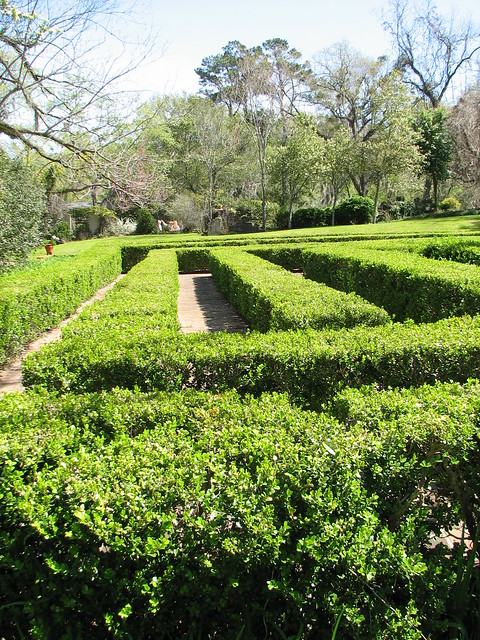
Real obstacles don't take you in circles. They can be overcome. Invented ones are like a maze. --
Barbara Sher
May 29, 2016
Shiloh
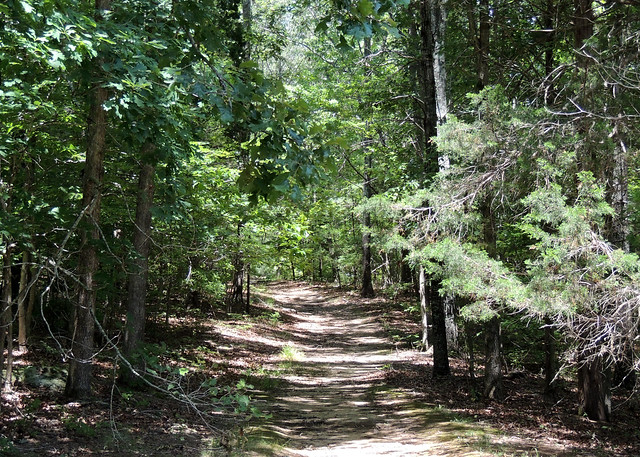
John and I drove over to Shiloh last Thursday (May 26). It's a beautiful park, so peaceful and green. Difficult to see it as probably a defining moment in the American Civil War. Shiloh, by the way, means peace.
May 12, 2016
Apr 13, 2016
On Dolls
I've always had an uneasy relationship with dolls, which is not rare. Dolls conjure The Uncanny, (more on this later) that allows for a kind of anxiety few of us want to discuss.

According to Kenneth Gross: “The puppet creates delight and fear. It may evoke the innocent play of childhood, or become a tool of ritual magic, able to negotiate with ghosts and gods. Puppets can be creepy things, secretive, inanimate while also full of spirit, alive with gesture and voice.” I've always felt the same way about many dolls. Once, when a child, I tore the arms off a doll because I was afraid of it. I felt safe. Without hands, the doll could not touch me.

According to Kenneth Gross: “The puppet creates delight and fear. It may evoke the innocent play of childhood, or become a tool of ritual magic, able to negotiate with ghosts and gods. Puppets can be creepy things, secretive, inanimate while also full of spirit, alive with gesture and voice.” I've always felt the same way about many dolls. Once, when a child, I tore the arms off a doll because I was afraid of it. I felt safe. Without hands, the doll could not touch me.
Apr 4, 2016
Mar 24, 2016
Mississippi Magnolia (Spring's Official Flower)
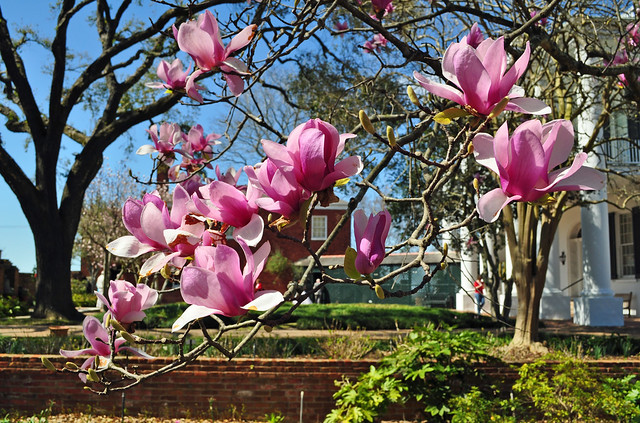
I have such an aversion to winter. I suppose this is because the early years of my life were spent in the bottom half of the state, and cold winters were few. Then, snow was a delight. Later in life I moved to the northwest of the state and the winters changed. They are wet and cool, so damp they turn my bones blue. I began to look for the Saucer Magnolia, a small, pink variety of the magnolia family. I often call them Tulip Trees. Like the Dogwood, they are one the first signs of Spring in Mississippi, and I adore them. Strange, I have none in my garden. Maybe this year. Yes, this year, I'll plant a couple.
(I am always looking for signs.)
Mar 22, 2016
Faulkner's tree

It is true that literature absorbs folklore. You can read that phrase in many articles about The South. Faulkner's work is a clear example of this. But if we look at Faulkner closely, we can glimpse the primitive beliefs of Mississippi's people in an age when books were rare things.
I've been on a "Faulkner journey" for a few years now. He's not an easy read. I am hoping to take a college course on him this fall or next year, along with one on Mississippi History. I took this photo today. The tree stands behind Faulkner's house. I was amazed at the roots on this tree and will post more photos this week.
Faulkner named his house Rowan Oak, because he believed it was good luck, the rowan tree legendary for protecting folks from fairies and otherworldly creatures. I believe, but am not sure that he planted several rowans and they all died, which makes me smile when I think of Faulkner.
Mar 20, 2016
Wink Poppy Midnight
Book Recommendation

“A dark, unpredictable mystery that . . . shimmer[s] with sumptuous descriptions and complicated psychologies. . . . Occult accoutrements, descriptions of the wild landscape, and a twisting-turning plot create an uncertain atmosphere that constantly shift readers’ perceptions of who is trustworthy.”
—Publishers Weekly
April Tucholke is one of the best prose masters writing in Young Adult or Adult fiction. Her stories are never simple, often defy genre, and present problems that the readers must solve. I love her work and highly recommend it.
Mar 7, 2016
The Ties that Bind
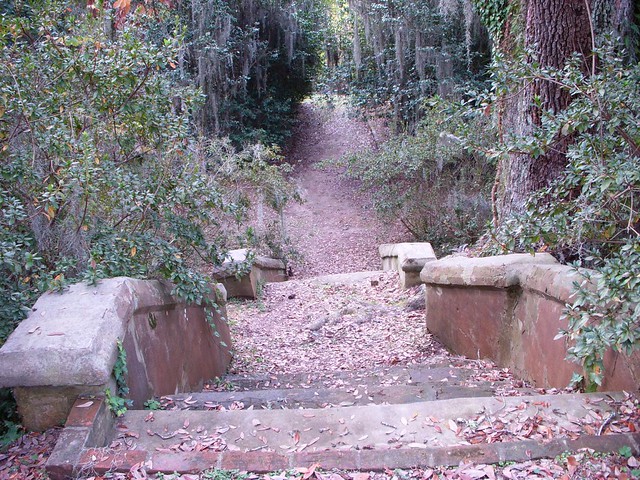
I'm stuck here, in this place. I know I've written about it before and will do so again. It's a path at Butler-Greenwood Plantation outside of St. Francisville, Louisiana. I have the fondest memories of it, and now the memories have taken on a life of their own. I feel as rooted as the trees, as settled as the old bricks at the bottom of these steps. Memory feeds my work. I write best if I am writing through this kind of bewildering, because there is a vagueness to memories, yes a truth, but also a fantasy. This is born out of past experiences and present dreams. Maybe future hopes?
And I am living in that haze.
And I suppose that is what writing fiction is too, capturing this haze and passing it down to some reader.
Feb 5, 2016
The Road
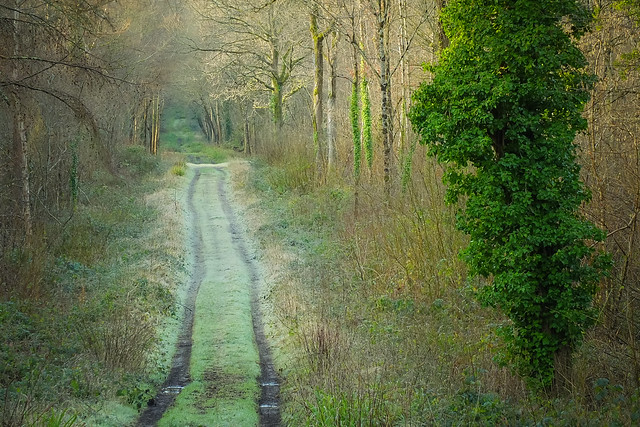
Time for a little update. Writing is going good. I am on the right road and pleased with the work I am doing.
Speaking of roads, I love this road. The guy who took this photo is on Flicker and he has a slew of gorgeous landscapes, some of the best work I have seen lately. There is a sort of purity to his work, it's not too stylized and yet, one can see the manipulation, meaning how he works with his subject. There is a great reverence for nature, a sort of humbleness. I favored a lot of them. Incredible work.
This road is just stunning, and I'm using it as a prompt in my writing. Metaphorically, I suppose this is the road I have taken, the solitary road that pulls me closer into the woods, into uncharted territory, and I am alone. For now, that is the best place to be, alone with the story. It's been awhile since I felt so optimistic about the book. All last year was a struggle. For now, that's over.
So green is my journey. So soft at times. So pure.
Oct 10, 2015
Jul 27, 2015
Cunning Folk and Familiar Spirits by Emma Wilby

If I had the opportunity to go back to school and study 'Cunning Magic,' I would. But I do have access to a lot of books, so reading and personal study is the next best thing. I've had this book on my Amazon wishlist for months and months, then a few weeks back, it became unavailable through Amazon, and I knew that if I was going to get a new copy for a decent price, I would have to buy it now from an independent dealer. So, I just went ahead and bought a lot of the folklore books that I am using for research and study. You can see some of them down at the end of the blog. Cunning Magic is the kind of magic that commoners practiced in the medieval ages and early modern times. Traces of it have evolved today into very new things. The thesis of this book is one I've long embraced, but it's not a popular viewpoint. As a Catholic, I've long explored the power of mysticism and how ordinary folks from past times have viewed lingering 'old ways' within their new perspectives with their religion. Yes, because religion is always in a state of flux.
It is safe to say that this state of 'flux' did not happen overnight. This is how history works, some things fade, others linger, some morph, some are rewritten, and a lot is a mix and mash of all of those. It's never what we think. It never happens for the expected reasons. Sometimes it's subtle. It's especially never what we think for ordinary people.
Wilby is looking at people accused of witchcraft and why? But what she explores differently is why these people made the confessions that they did. Were they hysterical fictions or did these confessions hold some kind of personal truth? I certainly believe in the latter for a lot of women who died, excluding the women who suffered in the religious wars of the Reformation, which added a new dimension and has no place in this discussion.
I am interested in women who believed in magic, mystics whose late medieval minds embraced the darkness in the same manner as prehistoric people did, as in darkness was an entity, yes, a 'thing' that could swallow their existence. These were women who lived in the borderlands of folk magic, cunning magic, and the religion of the Church.
As Emma Wilby wrote of Bessie Dunlop, "In her role as a 'cunning woman', or popular magical practitioner, Bessie Dunlop worked at the rock face of the sixteenth-century Scottish life: she delivered babies, healed the sick, consoled the bereaved, identified criminals and recovered lost and stolen goods."
Bessie had a familiar spirit who helped her in these tasks, one she confessed to knowing. A note in her trial records says she was convicted and burned. Most likely she was strangled prior to burning.
From this distance, it's difficult to view witch confessions as just created fictions when cunning folk were involved. It's even more difficult to speculate on what cunning folk really believed. Wilby's book is a wonder, it's thoughtful and provocative. It asks us to step back if we can, in time, and look at the the power of the human mind and how it connected to nature and the world around it.
Highly recommended.
Jul 5, 2015
The Hardy Hibiscus

Blue River 1

Pink Rose Mallow
My favorite flower is now the hardy hibiscus. I bought two new plants this year that are small and have almost a dozen of these (above). Next year I'm going to go searching for some special breeds, and try to find the deep pinkish red dinner plates that my father gave me. Roses die in a southern garden these days, due to Black Spot, which is a terrible disease and one that is difficult to get rid of, once it makes its home in your yard. The only way to attempt " control" it is to spray all the time and to monitor fallen leaves which means picking them all up and changing out the mulch frequently. I used to have a yard full of roses. Now I only buy old fashioned ones, what people call cemetery roses, because they are stubborn and Black Spot doesn't like them as well. But they do not bloom but once or twice a season. Since my garden is now organic only, I don't use a lot of sprays. SO roses are out. That's why I have fallen in love with the hardy hibiscus, which is not to be confused with the pretty tropical ones. The hardy comes back year after year and even multiplies and can be divided out. The more akin to the mallow family it is, the hardier it is, meaning, nothing can kill it. I am determined to have a yard full of them. They need little to no care and bees and butterflies love them. Gardening is one of my greatest pleasures. I prefer cottage gardens to formal ones, lots of perennials and old fashion flowers. I don't like things too neat. Smiling.
Jun 26, 2015
My favorite fairy

Although I've talked a lot about fairies and death, my favorite fairy is Melusine, a creature that is somewhat mysterious and who probably inspired this beautiful painting by Isobel Gloag. It's called The Enchantress. Melusine has an interesting story, both in myth and history. I think one of the better essays is this one, which talks about how she might have been a real person, like King Arthur, who developed over time into something more. I have incorporated her into my fiction in more ways than one, mainly because I like her name and am completely haunted by this painting. Also she makes a brief but important appearance in one of my favorite novels, Possession by A.S. Byatt. I always make allusions of some sort in my work to fiction or literary characters that I love.
I think it's safe to say that I write about ordinary people who get swept up in extraordinary circumstances. Imagine a knight, somehow seduced by this creature, then married to her, having children with her, creating a dynasty even, only one day to discover she was not mortal, and that having united with her, he faced something of a curse. That is great conflict. I also imagine this for young girls, tempted by fairies and demons and others. However, I am very much Team Human. Some very good stories have been destroyed by endings where the human crossed over into the other world, embracing something outside their natural mortal world, without facing any kind of consequences, as though leaving behind mortality is very easy and desirable. The same goes for girls and boys who learn they have secret powers, gifts that have no price or consequences. How does that happen? Why is it that good people never win these days? I don't know these answers but I have thought about them a lot while writing my stories.
I like the idea of being human and part of Nature. I think it's okay.
That's why fairies are interesting to me. They are not human. They are not us. They are part of a long history of human desire. We created them. Understanding why we did this is what makes folklore and fairy tales so important and relevant, even in an age where people feel very modern, secular, and free of superstition.
Jun 25, 2015
Briar Queen by Katherine Harbour

At the moment, it's difficult to discuss Briar Queen in the way that I wrote about Thorn Jack. I don't want to spoil the story for new readers. Like Thorn Jack, the story's narrative moves around Finn Sullivan and her mysterious love, Jack, but in a completely different way. We are no longer tangled up in their discovery of each other and the focus of the story is not how they find hope and love with one another. This is a completely different kind of plot.
This is expected of second books in a series. Unfortunately, first books are always about first encounters, first meets, first kisses, first impressions. The reader is always terribly engaged in these first moments, but they cannot be replicated in any series.
In the trilogy format, authors are always faced with a complicated set of choices. Series will end with the third book, and the third book is usually very powerful. Many series suffer from second book syndrome, which is nothing more than an author making a decision to write a story that will connect the beginning drama with the final. It's not always easy.
Briar Queen is very much a second book, but carries its weight and position by developing the world of the Fata. It is also about the consequences of Thorn Jack's core action. The rest of the book is one long journey where Finn and Jack find themselves on a difficult mission that will have grave consequences for many of the characters of this trilogy. The heart of Briar Queen belongs to Harbour's skillful worldbuilding and not her characters this time, although we meet some pretty nasty fairies, located in a world called the Ghostlands.
I found this book full of sorrows I did not expect, and a twist in the story that spoke to my feelings about how troubled fairies can be. There is mischief and deceptions.
My greatest pleasure in this story is Moth, a wonderful fairy who has a shadowed and complex past. Moth is old, older than Jack, and even by the end of the story, we are not sure who and what he is. Many of the narrators are unreliable and not to be trusted when it comes to the history of the Fata.
Harbour's gift as a writer is her vivid imagination, her willingness to embrace her uniqueness and to remain true to her fairies. As I've written before, her fairies are dark, decadent, and masters of deception. They hold no allegiance, not even to one another at times. They can be ruthless and yet, they are so incredibly charming and beautiful, so seductive in their longings and desires.
I'll come back to this story again and talk more about it in detail when I have read it a few more times. I'll do it at a time when I can write about events which would spoil the story for new readers.
Highly recommended. See my post on Thorn Jack here.
Jun 23, 2015
Thorn Jack by Katherine Harbour

Jun 6, 2015
On Time
Time is a dream, a destroying dream. It lays great cities in dust, it fills the seas. It covers the face of beauty, and tumbles walls.
Conrad Aiken, The House of Dust
May 26, 2015
Tanith Lee Has left this world (1947-2015)

"The shuttered house too was gaunt in the moonlight. Was it not somewhat like a tall thin skull, eye-socket, nostrils, cave of mouth with its teeth knocked out. And what about that phalanx of round attic windows above? Of course, the scars of bullets which had gone through the brain and killed it long ago."-- Stained with Crimson, Book of Paradys.
Emotionally invested description was her gift. She painted her stories like an artist. She paid attention to color. And I reread her all the time just to see the words, all those beautiful and yes, sometimes, very dark words.
Tanith Lee has died, and I am so sad to hear it. If you look on Goodreads, you'll see that she was in my top five favorite writers, always has been and always will be. Others come and go, but she remains. She was very prolific and I have heard she wrote some 300 short stories and 90 novels. I can't even imagine that. But I want to read them all. I think I had to write this today, I had to post it, because it's difficult to believe there will be no more stories and that she was ill and well, we distant readers, do not ever hear of such things. And now she has died and left this world.
Another hole in the soul that cannot be filled.
May 17, 2015
Read as Much as Possible (Fiction)

I've developed some great friendships while reading the same fiction. It's a terrible thing to admit, but I'm prejudiced in that I do judge people by their reading! Laughing. Oh, that was mean, but to a degree it's true. I do have some good friendships that are not based on reading, but my deeper friendships have grown out of love of good fiction. A lot of my life is about books and stories and the best relationships that I have are with people who share this passion. It's a good thing Fred and the boys love and read books. And they do, and I am so lucky, and I am going to teach both my grandchildren to read good books.
If you are a writer, it is essential to read as much fiction as you can, all across genres. This is how you will grow as a writer, how you will learn, and how you will understand how fiction changes over time. You can't make good fiction without knowing what it is. It just doesn't happen.
But I guess what I am saying here is, a life is much richer and fuller with books and stories from a variety of styles. The world becomes very big by reading all kinds of stories. So read. I think it was Stephen King who said if you want to be a writer, you need to read a lot and write a lot.
Well, I'm out of here. I moved over five-hundred books today.
Later...
May 13, 2015
Green Things

When I was little, I was always fascinated by plants, especially flowers. I noticed them right off when visiting relatives or friends. I'd always remember a person by what they had planted in their yard. "The person with the yellow roses." "That lady with the bushes with orange berries." "The man who swept his lawn with a broom and had neat boxwoods." And on it went for years and years until I became more sophisticated in naming plants. I still remember places and events by carrying an image of the landscape in my mind. It's odd. I remember one particular time when I was having a meeting with a doctor in his office, and the older man was talking to me and all I could do was focus on the roses he had on a table. I finally had to ask him if they came from his garden. They did, but I knew that, because I knew exactly what kind of rose they were, an old china rose called Old Blush. They make terrible cut flowers and the petals and leaves had fallen all over the table, but they were a favorite of mine, and from then on, I kept wondering what kind of man would put them in his office at work. It was totally fascinating, and that man went on to help me with three difficult pregnancies.
I suppose I am writing this because this morning I am going to work in my garden and because I am thinking about how I look at developing character in my current book. I am thinking about how personal writing can be even when we are writing genre fiction. It's all so telling.
I don't know the name of this painting. It may be a detail from a painting. I found it on Pinterest. But I love it. It's green and white for one thing and GREEN is the color of my mind. In some ways, it's very telling of me.
Out to the garden for the day.
Mar 17, 2015
Day Trips More Fearful Than A Ghost Story
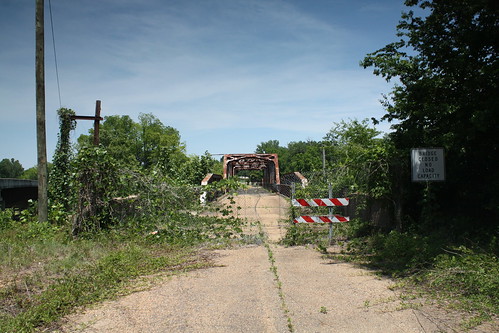
On Sundays we would go out for day trips, right after dinner, or before, depending on how far we were traveling. The weather was never a cause for delay. Sometimes the roads turned to dirt, and dust flew through the inside of the car and I would lie down on the seat, holding my breath. Sometimes it rained so hard Mother would pull over to the side of the road and we all smothered under the weight of water and lightning and thunder. If our destination was not a relative, it was some road Mother wanted to follow, some old house or cemetery or bridge she wanted to see. She told tales like a color commentator on a sports show, with varied voices, tales of people and places and things she knew or had been told. The tales always grew taller and taller but that didn't matter. "I remember, I remember." Mother said that often. We were time travelers, ghost hunters, bone collectors, bridge walkers. Our pockets were always full of stones and twigs, our knees scraped. We ate gnats while trying to breathe. That is how it was when Mother was restless and she was always restless on a Sunday, following Mass and dinner. That is how it was when days were slow, so slow I thought they would last forever. I saw many things, snakes and raccoons, possums and armadillos, bird nests, and bee hives, turtles bathing and sunning all without a zoo sign. I attended funerals and looked in wooden coffins, kissed the cold cheeks of old dead aunts of aunts of aunts, took home some of their dresses and old bowls, along with the turtles and a fear I did not understand.
I remember, I remember this old bridge.

Subscribe to:
Posts (Atom)